Staff & classroom support
Give educators and administrators a clear path to experienced help when devices, applications, accounts, or collaboration tools interrupt the day.
Schools, government organizations, and nonprofits deserve the same experienced support, security, planning, and price clarity as any modern enterprise—adapted to the way each organization actually operates.

Choose the closest fit below. Every path stays connected to the same managed services, experienced team, and transparent planning process.
Optimized Integrations supports K–12 schools, districts, private schools, colleges, and education organizations with managed support and planning shaped around staff, classrooms, leadership, and the systems connecting them.
Explore this support path Government & public sectorMunicipalities, counties, public agencies, and civic organizations can use the same accountable OI operating model—adapted to approval paths, legacy systems, access responsibilities, public-service schedules, and procurement requirements.
Explore this support path Nonprofits & mission-driven organizationsOptimized Integrations helps nonprofits, associations, foundations, and community organizations build a support model that respects limited resources while protecting staff productivity, program delivery, collaboration, and responsible access.
Explore this support path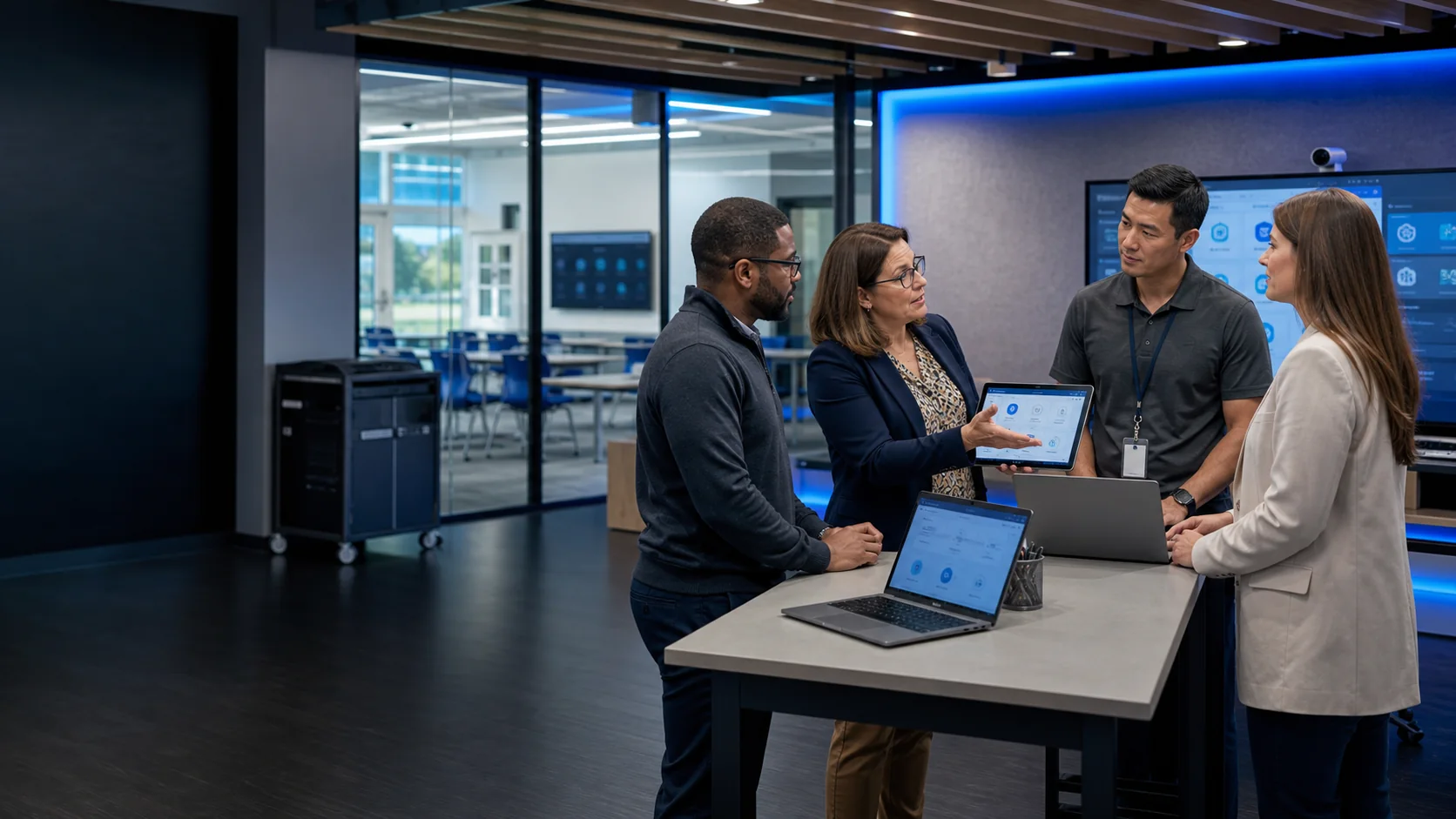
Optimized Integrations supports K–12 schools, districts, private schools, colleges, and education organizations with managed support and planning shaped around staff, classrooms, leadership, and the systems connecting them.
Give educators and administrators a clear path to experienced help when devices, applications, accounts, or collaboration tools interrupt the day.
Plan onboarding, role changes, offboarding, endpoint standards, and administrative ownership around the policies the organization approves.
Connect Wi-Fi, switching, cloud platforms, classrooms, offices, and remote work through one documented support model.
Prioritize practical safeguards, recovery readiness, and operational continuity without turning technology into an obstacle to learning.
Scoped responsibly. Student-data privacy, licensing, accessibility, security, retention, and jurisdiction-specific requirements are confirmed during discovery. Services are scoped to the organization’s approved policies and obligations.

Municipalities, counties, public agencies, and civic organizations can use the same accountable OI operating model—adapted to approval paths, legacy systems, access responsibilities, public-service schedules, and procurement requirements.
Organize support around the departments, locations, applications, and public-facing services that cannot afford unclear ownership.
Align identity, device, and administrative access decisions with approved roles, records practices, and escalation paths.
Sequence cloud, network, collaboration, and application changes so legacy dependencies and operational handoffs remain visible.
Keep priorities, scope, vendors, decisions, and next steps organized for leadership, stakeholders, and the teams doing the work.
Scoped responsibly. Procurement terms, data handling, records retention, security frameworks, accessibility, and jurisdiction-specific requirements are validated before scope is recommended. This page does not imply a government contract, certification, or universal compliance outcome.

Optimized Integrations helps nonprofits, associations, foundations, and community organizations build a support model that respects limited resources while protecting staff productivity, program delivery, collaboration, and responsible access.
Separate recurring support, projects, licensing, third-party costs, and future priorities so leadership can plan without hidden complexity.
Support staff, board members, volunteers, programs, and approved partners with practical identity and information-sharing controls.
Connect offices, remote teams, events, and community programs through support that can adapt as staffing and locations change.
Prioritize the systems and safeguards that protect essential work, then build a roadmap around what the organization can sustain.
Scoped responsibly. Vendor nonprofit programs, donated or discounted licensing, grant eligibility, data requirements, and final savings depend on provider rules and organizational eligibility. OI verifies the available path before recommending it.
The complimentary assessment determines which path fits, what ownership stays internal, and what should be scoped separately.
OI can coordinate day-to-day support, maintenance, security, vendors, and planning for organizations that want a complete operating model.
Internal IT can retain ownership while OI adds experienced capacity, specialist depth, process support, and documented escalation where it helps most.
Organizations can start with an assessment, roadmap, migration, security initiative, or coordinated project without assuming a universal managed-services fit.
Industry language should never replace real discovery. These four checks keep the recommendation grounded, usable, and clear enough to approve.
Users, roles, departments, locations, remote work, operating hours, and the communities or constituents being served.
Devices, applications, networks, cloud platforms, vendors, administrators, dependencies, and current documentation.
Approved policies, privacy, security, retention, accessibility, procurement, reporting, and recovery expectations.
What is included, what is project work, which third-party costs remain separate, and which sequence creates the clearest value.
A complimentary IT optimization assessment turns current friction, responsibilities, priorities, and budget realities into a practical next-step plan.